
EU4Green Recovery East It is a regional programme funded by the European Union that supports Eastern Partnership countries in strengthening environmental policies and turning them into concrete instruments for sustainable economic development. The programme aims to align environmental objectives with priorities related to economic growth, industrial competitiveness, and the reduction of import dependency.
In the Component 1 – Promotion of the Circular Economy and Resource Efficiency, the programme supports the adoption of circular models in industry as a solution for reducing costs, creating jobs, and alleviating pressure on the environment.
During 2026–2027, E-Circular in partnership with AO DNTact as National Service Provider – NSP for the implementation of circular economy pilot projects in the Republic of Moldova, based on a contract with UNIDO..
In this role, E-Circular provides analytical, technical, and operational support to public authorities, industry, and other relevant stakeholders, contributing to the translation of circular economy objectives into practical, nationally applicable solutions.
The project supports the Republic of Moldova in developing concrete circular economy solutions for the industrial sector, through an integrated approach that combines:
Through this approach, the project establishes a solid evidence base of data and analyses that support informed decision-making and effective interventions for the transition of industry towards more circular models.
The project is structured into four complementary components, which cover the entire circular economy pathway—from analysis and strategic planning to practical testing and the identification of solutions applicable in industry. Together, these components ensure an integrated, data-driven approach, built on collaboration with relevant stakeholders and oriented toward concrete results for the circular economy in the Republic of Moldova.
This component focuses on the analysis and prioritization of industrial value chains at the national level, in order to identify the sectors with the highest potential for the application of circular economy principles. The activity provides a structured understanding of resource flows, the actors involved, and the key leverage points where circular solutions can be implemented.
Based on the analytical results, this component focuses on the practical application of circular economy solutions through the use of digital tools and the implementation of pilot projects within priority value chains. This approach enables the testing of concrete solutions, the assessment of their impact, and the formulation of recommendations for scaling up and replication.
This component supports strategic decision-making by analysing technologies relevant to industrial transformation and the circular economy. It assesses technological trends and future scenarios that help prioritize investments and align technological solutions with the analysed value chains.
This component focuses on identifying and analysing industrial waste streams, providing a solid data foundation for the development of solutions related to reuse, recycling, recovery, and industrial symbiosis. The results support the identification of economic opportunities and the reduction of environmental impacts.
The project contributes to the Republic of Moldova’s transition towards a more resource-efficient economy by improving the valorisation of industrial materials and waste and by reducing value losses along economic value chains.
În calitate de Furnizor Național de Servicii în cadrul programului EU4Green Recovery East, E-Circular sprijină dezvoltarea capacităților naționale pentru:
Prin această abordare, economia circulară este integrată ca instrument strategic de dezvoltare industrială , în deplină corelare cu obiectivele naționale și europene.
We thank our supporters for their essential contribution in making this project a reality.
Discover other initiatives focused on the circular economy and sustainable waste management in the Republic of Moldova.
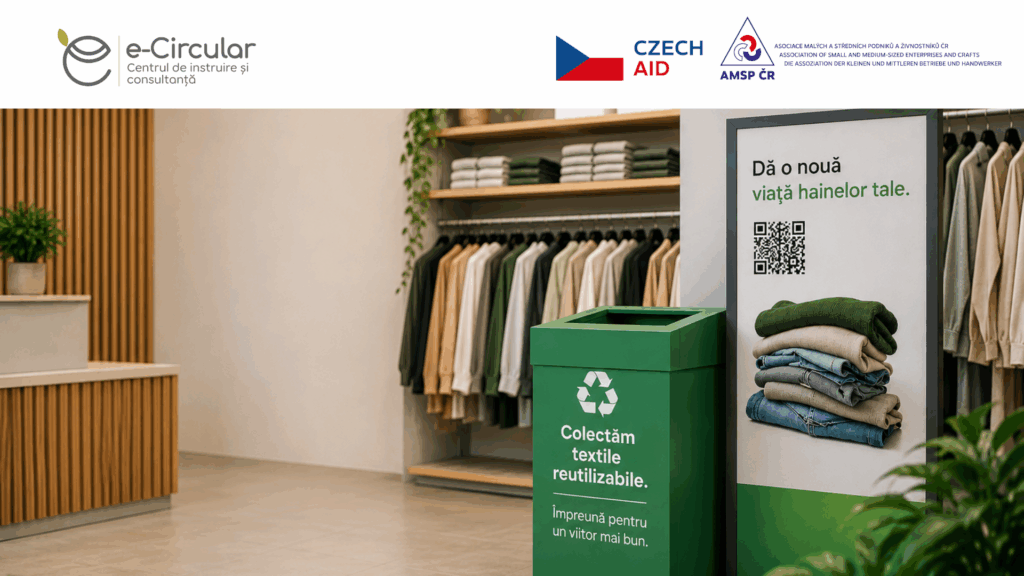
Proiectul reprezintă o oportunitate de a transforma cerințele europene în avantaje competitive pentru industria textilă din Republica Moldova. Prin transfer de cunoștințe, schimb de experiență și testarea unor soluții practice împreună cu producătorii locali, inițiativa contribuie la dezvoltarea unui sector textil mai competitiv, mai inovator și mai pregătit pentru tranziția către economia circulară.

Proiectul contribuie la consolidarea capacităților naționale și la promovarea economiei circulare în Republica Moldova, bazat pe utilizarea eficientă a resurselor, reducerea deșeurilor și dezvoltarea unor practici circulare aplicabile în sectoare-cheie ale economiei.
Proiect implementat de A.O. EcoVisio și A.O. E-Circular în parteneriat cu Ministerul Mediului și I.P. Oficiul Național de Implementare a Proiectelor în domeniul Mediului, finanțat de Suedia.